
The Epstein shaped elephant in the room
When does the grooming, trafficking, and sexual exploitation of young women and girls become an issue for society? When is a woman making a liberated, empowered choice and when does she become a victim? Recently, we have had answers, of sorts, to the questions, and they make for grim reading.
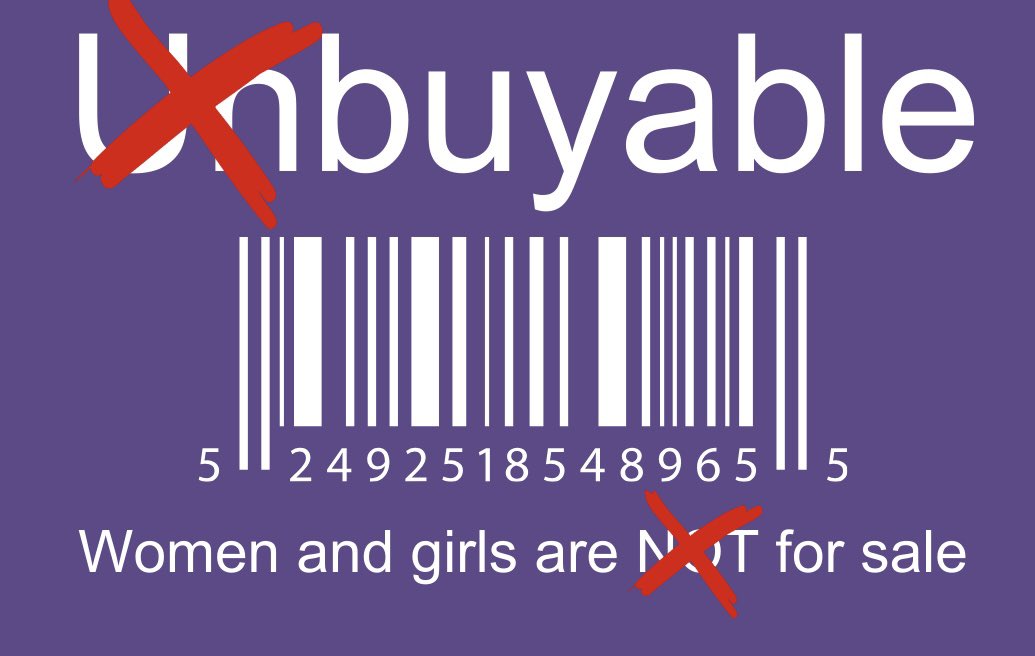
Earlier this month, I was in Holyrood to hear the Stage One debate on Ash Regan’s Prostitution (Offences and Support) (Scotland) Bill, otherwise known as the Unbuyable Bill. Sitting in the gallery were survivors who had poured out their hearts and stories in a series of in-person and online meetings. Strangely, however, these events had bypassed Jamie Hepburn – one of the very few MSPs opposed to Bill who made an attempt to articulate why the protection of women wasn’t on his agenda – he bemoaned the lack of testimony from exited women, even as he confirmed that he had managed to meet the “happy hooker” contingent represented by Scotland for Decrim and Ugly Mugs. A rather edgy Alex Cole Hamilton paid lip service to the harm of prostitution, but argued that “We cannot wish away prostitution. Given that it will forever exist, we must ensure that it happens in the safest possible way.” We can’t wish away rape and murder either, but that shouldn’t deter legislators from ensuring criminal sanctions remain. No doubt Cole Hamilton would have told William Wilberforce he was a hopeless idealist and rather than outlawing the slave trade, it would be better to ensure more room and provisions on the boats and fewer beatings in the plantations. He explained that “Our position on the issue has been established for some time. We believe in decriminalising sex work in line with international best practice”. Has he ever stopped to wonder whose interests this serves and why some might influence a political party to decriminalise a trade which serves abusers and harms women and girls? Saying that a position has been “established” for some time is not an argument in its favour, it’s simply an excuse for a lack of critical thinking and interrogation. As with gender recognition, the empty phrase “international best practice” was thrown around without evidence or investigation. Maggie Chapman who never passes up an opportunity to cause offence, declared “sex work is work” and that many “find it meaningful and fulfilling work. It earns them a good living and puts food on their table”. She fretted about the “clients” and the “landlords” who would be criminalised: Green objections to capitalism and rental property ownership have their limits, it seems.
Afterwards, we sat in the bar while a succession of politicians trooped by, those who voted against the Bill scurrying past, averting their eyes. The SNP claim to really think that, yes, prostitution is violence against women and, yes, the Nordic Model is the best solution, but the party line was that it was all so complicated that they couldn’t possibly support the principles of a Bill which had, at its core, these fundamental tenets. Some of the survivors looked shell-shocked: one younger woman sat clutching her wine glass in mute misery. Venessa McLeod brought the table to tears as she read her thanks to Ash. Nessa has written her story for The Frontline, she tells of how abuse and homelessness made her vulnerable and ripe for exploitation at the tender age of 17. The men who used her enjoyed her youth and fragile physique: the worst of them asked her to pretend she was his six year-old sister. Nessa is a bright, articulate young woman who should have been doing her Highers, not being exposed to the worst of humanity. On X, she and the For Women Scotland account got into an argument with a retired headteacher who claimed that women had “chosen to be a sex worker”. When asked if it was a career he would have promoted to school leavers in his establishment, he replied that his pupils were “generally in the position that they had a choice of careers”, a rather grim echo of Ruth Maguire’s question to Chapman about whether “sex work” should be offered as “work experience”. He went on to ask what prostituted women were supposed to do instead, as though they were fit for little else. But women like Nessa are worth so much more. She is now at university, a choice she should have had at 17, just like the retired headmaster’s pupils. Why should it ever be acceptable to say that some women’s horizons must shrink to a point of misery and pain when they may be too young to drink or drive, and why should legislators (and headmasters) think that is all some are good for?
There’s a power imbalance in prostitution. The men who pay to use these women are generally in good jobs and they are frequently married. We can’t pretend that they will not be represented in the higher echelons of Scottish society, that they might not sit in our Parliament or work in the Civil Service. We’ve heard that members of the police sometimes took a “freebie” from a woman in return for not arresting her, we’ve been told by an exited woman that her former school friend’s father used to be a punter. So there is a need in some circles to maintain the facade that punters are kind and women are willing, that trafficking is not the lifeblood of supply, and that abuse and violence are unfortunate rarities, not an inevitability. The fiction that this can be a “meaningful” job pales in the light of the grotesque reality of the “work” and the absence of any ability to refuse clients’ demands. Michelle Thomson in a passionate and angry speech spelt it out:
“They are systematically raped, vaginally, anally and orally, multiple times a day. They are spat on, ejaculated on, urinated on and sometimes defecated on. They suffer repeated abrasions and injuries to their vagina and anus, often requiring medical treatment, are at a high risk of being slapped or punched and are 18 times more likely to be murdered. They are strangled, potentially until they are unconscious and often without even knowing that that is happening. They are verbally abused by the people who pay for access to their bodies and are at a high risk of contracting sexually transmitted diseases and other serious infections. They lose most of their earnings to the pimp who is controlling them and become addicted to mind-numbing substances simply to endure the disassociation and develop complex post-traumatic stress disorder. Even if they escape, they struggle for the rest of their life to form trusting relationships with men. On the upside, they will learn that their most valued skill is performing, because their rapists require them to act as though they enjoy what is being done to them.”
Is it any wonder that these women often have levels of PTSD only otherwise seen in combat veterans?
Is it also any wonder that a political class so determined to ignore the abhorrent realities of the grooming gang scandal would be so craven? Of course, if women are prostitutes, that problem could be wished away too – and it was. Children abused by the gangs were said to be “selling sex” by police and social workers. No longer victims, they were too much of a handful for the council. Presumably, some might go further and say that they were teenage entrepreneurs willingly entering into a marketplace which a certain MSP says is “meaningful and fulfilling”. These teenagers were trafficked around the country in the same way that many victims of pimps are rented out. The work of journalists like Charlie Peters is finally exposing the cover up of the scandal and the full horrors, including threats and violence meted out to girls who tried to escape. It is folly, at best, to assume that similar abuses and threats are not used routinely by brothel owners or other “boyfriends”.
Being a so-called “high-end escort” is no protection either. Diane Martin of A Model for Scotland was trafficked overseas to the famous, those in government, royalty, diplomats, and business men. She was told that if she disappeared, her mother would never know what had become of her. As she said, “The better wallpaper and a mini-bar doesn’t dilute what it feels like when someone has a gun and asks if you want to see your mum again. Being in a penthouse suite doesn’t soften the blow of rape or having someone leave bite marks all over your face.”
This is why the reaction to the horrors of the Epstein Files is so contradictory and bewildering. Diane and Nessa were both teenagers when they were groomed into the sex “industry”, just as Epstein’s victims were. Virginia Giuffre, perhaps the best known and most tragic of his victims wrote , “In my years with them, they lent me out to scores of wealthy, powerful people. I was habitually used and humiliated – and in some instances, choked, beaten, and bloodied…I believed that I might die a sex slave.” It’s harrowing, and the story is horribly similar to those related by the women in the public gallery of the Scottish Parliament. Giuffre, like many of these women, suffered abuse, neglect, and homelessness. Maxwell and Epstein preyed on her weaknesses and held out the hope of possibilities, training, and travel.
Everyone can see, it seems, that what followed for Giuffre and other girls like her was a waking nightmare. I have yet to hear Ms Chapman argue that she “chose” to give up her job in Mar-a-Lago and her schooling for the adventure of foreign travel, the lure of luxurious accommodation, or the chance to meet the rich and famous. Yet, if you think, as advocates for decrim do, that “sex work” is a choice and that reducing these women to victims negates their agency, you could make that argument, and if you make that argument about Nessa and Diane, why not apply it to Virginia?
Richard Branson offered advice to Epstein to help him rehabilitate his image after his initial conviction: “I think if Bill Gates was willing to say that you’ve been a brilliant adviser to him, that you slipped up many years ago by sleeping with a 17½-year-old woman and have done nothing that’s against the law since, and yes, as a single man you seem to have a penchant for women. But there’s nothing wrong with that.” Nothing wrong with that. And viewed through the lens of the decrim advocates, there probably isn’t. Mila’s account of “sugaring” and the websites that allow older men to find teenage girls makes uncomfortable reading for those who would like to pretend that Epstein and his circle were just an aberration. Once, she recalls, “my best friend and I made out on a video call to a headmaster of a Manchester girls’ secondary school, who’d admitted to us he often fantasised about his students.”
“An FBI document details Epstein’s modus operandi: he made each girl feel special to gain her trust, was always pushing her boundaries but stopped if she was uncomfortable. He bragged about his connections and his wealth but ensured the household felt normal and “fun”.
“Then he promised a pathway to success — modelling, college — to increase her emotional and financial dependency while slowly taking over her life. He upped his sexual demands: sex toys, threesomes, sleeping with his friends. His “semi-permanent” girls got apartments but were dumped if they were unstable, clingy or when they got old (over 27).”
It’s a pattern we see repeated over and over in survivor testimony like Mila’s, a slow descent in ever greater darkness, a chipping away and erosion of boundaries until the belief that you are in control is torn away in the reality of locked rooms and the increasingly extreme demands of “clients”. Zara, a victim of the grooming gangs testified that her abuser would pick the girls up in his limousine and offer them “promotional work”, “[It] started off as that – just promoting, getting picked up in groups and driving around, drinking, dancing…The more you did, the more money he’d offer you… it became normal to do that.”
SERP Ireland said at a meeting in Parliament (another one that Jamie Hepburn failed to attend) that their research indicated that a mere 5% of women in prostitution were there by what might be deemed to be “choice”. Of the rest, 15% were trafficked and 80% were extremely vulnerable (and often former victims of trafficking). In other words, most of the women in prostitution are there due to similar drivers which enabled Epstein to exploit his victims or created the environment for grooming gangs.
So, if the profile of the women is often, horribly, familiar, is it about the men? The Epstein files have been enthusiastically pored over by those eager for a celebrity or political scalp. Andrew Mountbatten Windsor carries the arrogant assumption of a man who feels he has done nothing wrong, and this is probably reflected in the men in Stockbridge who paid to rape Nessa. The women were the same age, the men could kid themselves that they were willing, why should they be blamed because they failed to think before entering into a one-sided sexual transaction with a teenager which depended on money and power? Diane Martin was trafficked to the rich and the powerful but because they remain nameless, their abuse merits less consideration even if it transpires they were also visitors to Epstein’s island.
Scotland for Decrim tells us to listen to “sex workers”. Maggie Chapman said “We must trust sex workers with their own lives, listen to them and follow their demands”. The most charitable explanation for Chapman is that she is staggeringly naive about the reality of prostitution. Epstein darkly commented that the girls he exploited could be made to testify for him on video if needed, but coercion is not always necessary. Mila says “the feminism I was exposed to was telling me that selling my body was a form of empowerment, that I was sexually liberated, that capitalising on patriarchal constructs for financial gain was the ultimate middle finger to the patriarchy…I felt I was smarter and sexier than other young girls who were choosing not to be bought by old men.” Later, when she had exited, others would tell her she was “whore-phobic” and her perception warped by bad experience, “I suppose the sex-workers we were meant to be listening to were the ones who were still involved in the business, the ones who still had to maintain their dissociation and cognitive dissonance the way we had before we exited the sex trade.” Girls traded in the grooming gangs would often persuade themselves that their abuser was a “boyfriend” until the reality of the degradation they endured was too much to maintain the lie.
There’s a squeamishness about addressing the issues of sexual exploitation. Many in power are unwilling to look into the belly of the beast if it touches their colleagues, their neighbourhood, or encroaches on ideological shibboleths, but it does not quash the human desire for prurient gossip. When the exploiters are known, named, and – more importantly – famous, they can be exposed to the delicious frisson of innuendo. The grooming gang scandal was covered up by those worried that exposing sexually offending Asian men might lead to race riots, Epstein’s clients were protected by wealth and power, and survivors of prostitution in Scotland were deliberately, cruelly, ignored by the MSPs who refused to hear them. The fact is, overwhelmingly, in all cases, the victims are women, the perpetrators are men. This isn’t about asking which category of men poses the most risk but the fact that, sadly, the abusers are found in all classes and all races. Does the trawling of the Epstein files reveal concern for the nameless victims or simply the delight in the powerful brought low? How can politicians affect horror at the notion of teenage girls groomed and abused by this circle but remain unmoved by the plight of girls of the same age exploited mere minutes from our Parliament? If the revelations of the Epstein files are to mean anything, then the victims must matter, and, if they matter, then so must the women raped in Edinburgh saunas and the victims in Rotherham. If we are really to learn, we must acknowledge that sexual exploitation is an evil and it cannot be argued away by appeals to “choice” or “empowerment”. The women of Scotland deserve better.